Every local business has a silent majority.
It’s the customers you served well, who left happy, who tell their friends about you in person - and who never, ever, leave a review. They’re invisible on your Google Business Profile. They’re invisible in the AI summaries that decide who gets recommended. They’re invisible in the trust signals that drive the next prospect’s decision.
We call this the silent review deficit: the gap between the customers who would leave a positive review if you asked, and the ones who actually do.
In most SMBs we audit, that deficit runs around 80-90%. Out of every ten genuinely happy customers, eight to nine never write anything down. The two that do are usually outweighed by the louder, angrier minority who do take the time when something goes wrong. BrightLocal’s 2024 Local Consumer Review Survey found that while 76% of consumers say they’d leave a review if asked, only a fraction of businesses actually ask in a way that converts - which is the entire problem.
This piece breaks down why the deficit exists, why it’s getting worse in 2026, and the operator playbook to flip the ratio without sounding desperate or pushy.
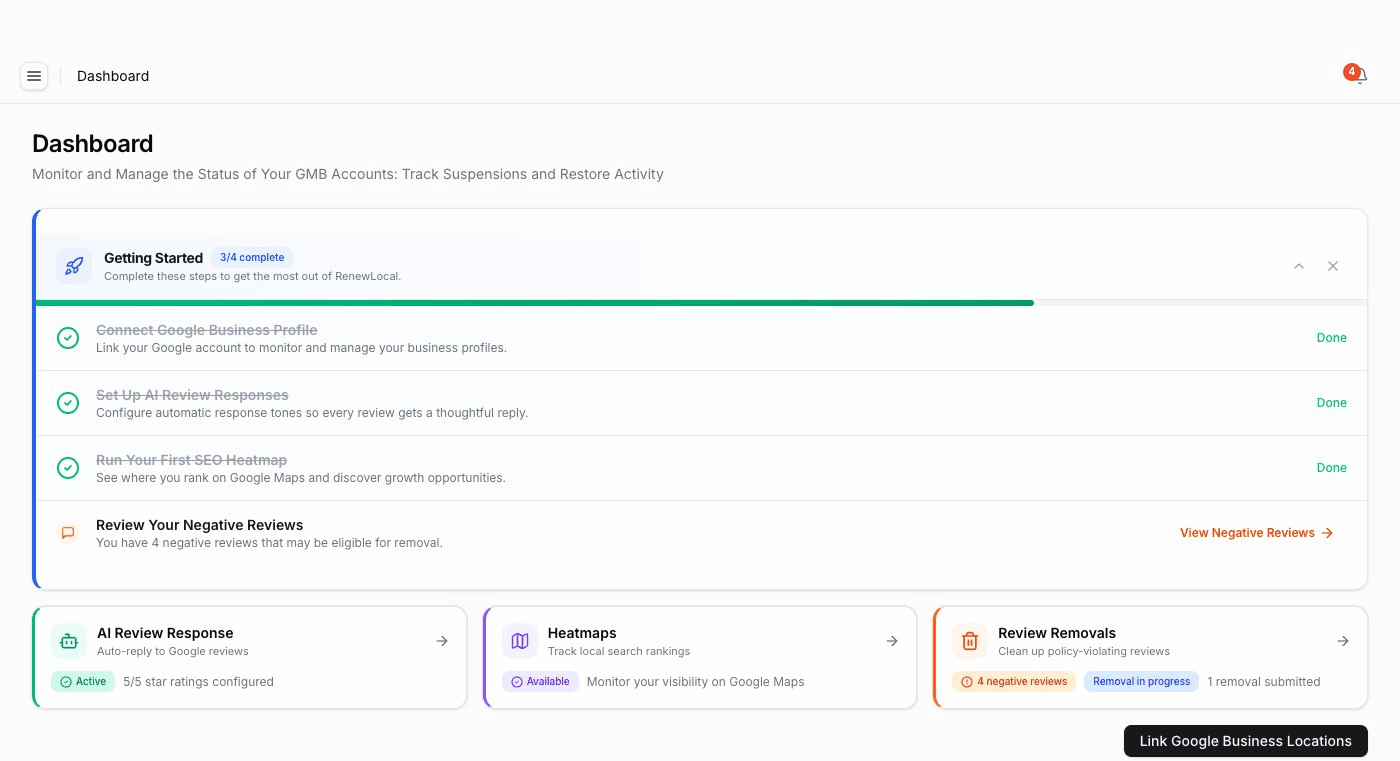
RenewLocal’s dashboard surfaces the silent review deficit directly: addressable customers, ask conversion rate, and review completion rate side-by-side. Most SMBs see the gap for the first time when they look at this view.
Why Happy Customers Are Silent
The instinctive explanation is “people are busy.” That’s true but lazy. The real reasons are structural.
1. Satisfied Experiences Have No Narrative Tension
The most-shared content in any medium - reviews, social posts, dinner-table conversations - has emotional charge. Either something went amazingly right or something went unfairly wrong.
A dispute, a delay, a billing surprise - those create a story worth telling. “They came on time, did the work for the quoted price, and left.” doesn’t. The customer who got exactly what they paid for has nothing to report - there’s no twist, no resolution, nothing to argue about. So the review never gets written.
2. Completed Transactions Close the Mental Loop
The moment of peak gratitude - when the technician walks out the door, when the meal arrives perfect, when the order ships on time - is also the moment the customer’s brain marks the transaction done and moves on.
By the time they’re sitting at home that evening, the experience is no longer top-of-mind. The window for asking has closed. The friction of recalling the business name, finding the listing, and writing a review now outweighs the impulse to praise. Behavioral research compiled by ReviewTrackers shows that the probability of a customer leaving a positive review drops by roughly 50% within 24 hours of the experience ending.
3. The Asking Has Felt Generic
Most owners ask for reviews. The asking just doesn’t land.
A printed card with “leave us a Google review!” gets ignored because there’s no person attached, no specificity, no social pressure. A blanket email blast a week later gets opened by a fraction of the list and acted on by almost none of it. The asks that do convert are person-to-person, in the moment, with a specific reason - and most owners don’t structure their ask system that way.
We covered the mechanics of high-conversion asks in Google review QR codes: why 80% of SMBs set theirs up wrong. The short version: timing and language explain almost all of the gap between a 2% ask conversion and a 12% one.
Why the Silent Deficit Is Getting Worse in 2026
The deficit has always existed. What’s changed is how much it costs.
AI Engines Now Read Review Volume as a Trust Signal
When ChatGPT, Gemini, or Google’s AI Overview decide which business to recommend in a local query, they don’t just read your average star rating - they read the volume and recency of reviews. A business with 40 reviews looks less trustworthy to an AI summarizer than a business with 200, even at the same star rating.
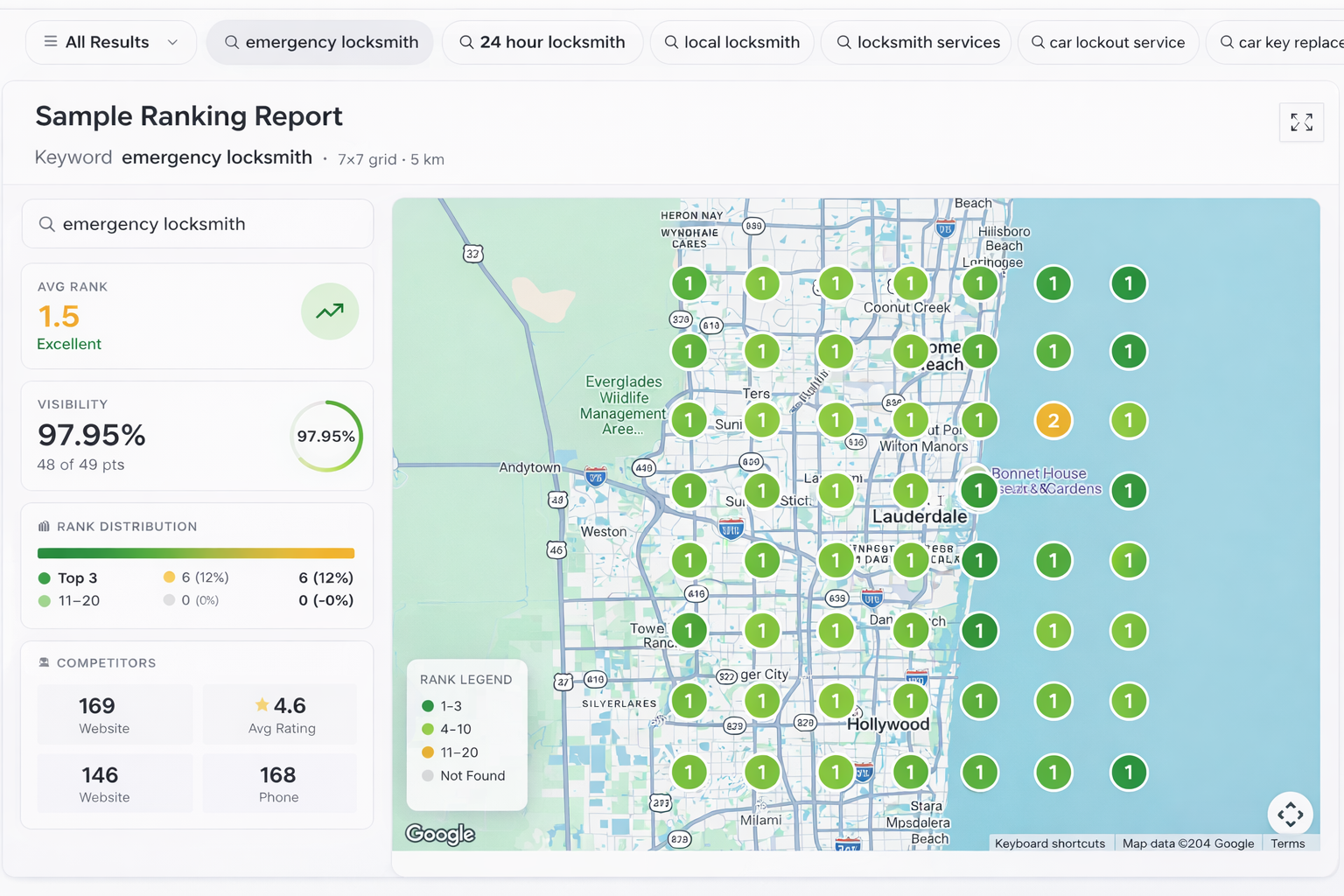
AI engines now weight review volume and language specificity heavily. RenewLocal’s ChatGPT visibility tracker shows exactly which review phrases are surfacing in AI answers - and which silent customers’ missing reviews are costing you AI-generated leads.
This means the silent customers - the ones who didn’t review you - are now actively costing you AI-generated leads, on top of the local pack rankings they already cost you. The deficit compounds with the AI shift.
We unpacked this in why your Google reviews are disappearing in 2026 - the AI-citation angle is the most under-priced reputation factor right now. We also broke down the four ranking signals reviews actually feed in do Google reviews help SEO: the honest operator answer.
The Average Review Bar Is Rising
Five years ago, a 4.2-star business looked solid. In 2026, the local-search median has crept up - the average for top-3 local pack rankings is now closer to 4.5-4.7. Listings under 4.3 stars are getting filtered out of consideration before consumers even click.
The silent customers - the ones whose four-and-five-star reviews never got written - are exactly the ones who would have pulled your average up. Their absence is what keeps you stuck below the threshold that triggers consumer trust.
Review Velocity Now Outranks Review Count
Google’s local algorithm in 2026 weighs recent review activity more than total review count. A business with 80 reviews and a steady drip of new ones every week outranks a business with 400 reviews and the most recent one from a year ago. Whitespark’s annual Local Search Ranking Factors study consistently ranks review velocity and recency among the top 20 factors influencing local pack position.
The silent deficit isn’t just about historical missed reviews - it’s about a slow, consistent loss of fresh review activity that compounds month over month.
The Four Operator Habits That Flip the Ratio
We’ve audited this pattern across home services, dental practices, auto shops, restaurants, retail, and professional services. Four operator habits consistently move the ratio.
Habit 1: Move the Ask to the Moment of Peak Satisfaction
The single biggest lever is when you ask. The right moment is at the precise moment of completion - not 24 hours later, not in a follow-up email, but now, while the technician is still there or the customer is still at the counter.
Concrete examples:
- HVAC / plumbing / garage door: the technician hands over the work-completion form with a QR code printed on it, says “if everything went well, this is the best thing you can do for the business - takes 20 seconds.”
- Dental / medical: the front desk hands the patient a small card at checkout, while the appointment is still fresh.
- Restaurant: the server brings the check with a small QR card on the tray, mentions it briefly when delivering it.
- Retail: the bag the customer leaves with includes a printed thank-you note with the QR code.
The shift from “ask later via email” to “ask now in person” typically lifts conversion 3-4x.
Habit 2: Use the Person, Not the Brand, in the Ask
Customers respond to people, not corporate entities. The ask that converts is from a named human:
“If Mike did a great job today, the best thing you can do for the business is leave a quick review. - Drew, owner.”
The ask that doesn’t:
“Please leave us a 5-star review on Google!”
Same content, completely different conversion. The person-to-person framing turns the ask into a small social favor, not a marketing transaction.
Habit 3: Build Multiple Ask Moments, Not One
A single ask captures the customers who happened to be in the right mood that day. Multiple asks - at completion, in the post-service email, in a 30-day follow-up SMS - capture the customers whose mood shifted, whose schedule got busy, whose intention to review needed a second nudge.
The right cadence (we use this with clients):
- In-person at completion - QR code, named ask.
- Email within 24 hours - short, named, with a one-tap review link.
- SMS at day 5-7 - only if no review yet, only one nudge, tone is casual.
Stopping at the in-person ask leaves a large share of the addressable reviews on the table. The follow-up channels are what capture them.
Habit 4: Reply to Every Review, Even Tiny Ones
Customers who see prior reviews getting acknowledged are more likely to leave their own. Replies are a public signal that the owner reads and engages - which lowers the perceived friction of writing the next review.
We covered the reply mechanics in how to respond to Google reviews: 12 templates that don’t sound corporate. The short version: short, named, human-voice replies to every review (not just the negatives) compound your future review activity in ways no other lever does.
The Compound Math
The silent review deficit isn’t a one-month problem - it’s a compounding loss.
A business that fixes the ask system goes from, say, 4 reviews per month to 14. That’s 120 additional reviews per year. Those 120 reviews:
- Pull the rolling average up (assuming most are 4-5 stars).
- Feed Google’s velocity signal, lifting local pack rankings.
- Feed the AI engines’ volume signal, lifting AI-generated recommendations.
- Become referral-quality social proof for the next prospect.
We ran the revenue math on what that lift is worth in how much are Google reviews worth, grounded in Harvard Business School’s working paper on review revenue impact. For a $1M business, applying Harvard’s 5–9% per star to a move from 3.8 to 4.5 stars would imply $35,000-$63,000 a year - a model built on restaurant data rather than a measurement of your business. Most of that lift would come from customers who would otherwise have stayed silent. Run your own numbers in our review impact calculator to see the dollar value of the lift AND exactly how many reviews you need to hit your target rating.
What This Means for the Next 90 Days
If you take nothing else from this piece:
- The silent deficit is the highest-leverage reputation problem you have. Most operators don’t even measure it.
- The fix isn’t a louder ask - it’s a better-timed and more personal ask.
- The compound effect over 12 months is the difference between an invisible listing and a category leader.
For SMBs ready to systematize the ask across every customer touchpoint without losing the personal voice, dedicated platforms matter. RenewLocal’s GBP management dashboard and review and reputation management service handle the multi-channel ask cadence, the named-template generation, and the velocity tracking that closes the silent deficit over time. Review management for local businesses - like RenewLocal - is what turns the deficit from an invisible loss into a measured, manageable system. Treated as core infrastructure rather than an occasional marketing push, reputation management for small business is the difference between a profile that grows with your business and one that quietly falls behind it.
Ready to protect your Google Business Profile?
AI-powered review management and profile protection. Start your free 7-day trial.