You can tell within five words whether a business owner wrote a review reply, or a corporate template did.
“We sincerely regret your experience and value your feedback as we strive to improve our service quality.” - that’s a corporate template. The customer reading it knows it. The next prospect scrolling reviews knows it. Google’s AI engines that summarize business reputations also know it.
The reply is supposed to be the operator’s chance to demonstrate ownership. Generic responses do the opposite - they make every review look identical, which signals an absent owner and a process-driven culture. Research from ReviewTrackers found that 53% of customers expect a response to their review within seven days, and 63% have never heard back from any business they’ve reviewed - a gap that compounds the trust problem.
This guide gives you 12 reply templates organized by the actual scenarios SMBs see, plus the five-line framework that makes any reply land. Use them as starting points, then break them. The ones that don’t read like templates are the ones that work.
The 5-Line Reply Framework
Every effective review reply follows the same skeleton:
- Address the reviewer by name - signals this is a human-to-human reply, not a script.
- Acknowledge the specific thing they said - proves you read it.
- Take ownership or extend warmth - never argue publicly.
- Offer a clear next step - phone number, manager email, or “come back in and we’ll make it right.”
- Sign with your name - same human-signal reason as line one.
The whole reply runs two to four sentences. Short replies outperform long ones. Long replies read defensive. Google’s own guidance on responding to reviews confirms that owner responses are visible to all future readers and weighted by the engagement-signal layer of the local algorithm.
We covered the AI-response generation side of this in why an AI review response generator is essential for local businesses - useful for scale, but the human signal still matters. The best workflow is AI-drafted, owner-edited, owner-signed.
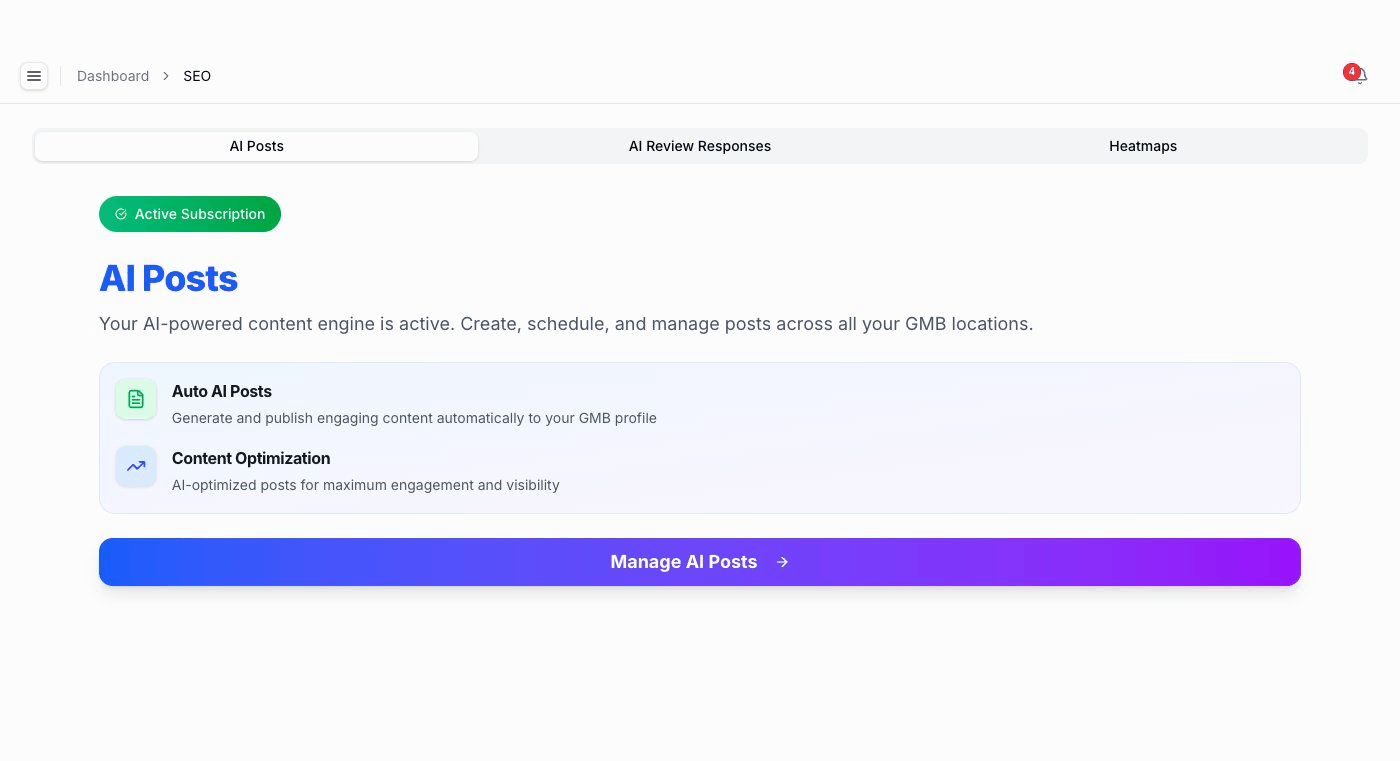
RenewLocal’s AI Review Responses dashboard generates scenario-aware drafts that match the patterns below - owners review, edit, and approve in seconds rather than starting from scratch.
The 12 Templates
Template 1: The Five-Star with No Detail
“Great service!” (5 stars, no specifics)
Thanks, [Name] - we’re really glad you came in. If anything stood out about the experience, we’d love to hear what - those details help us train the team. Either way, thank you for taking the time. - [Owner name]
Why it works: gentle prompt for more detail (which compounds keyword density on the listing - see do Google reviews help SEO for why this matters) without sounding ungrateful.
Template 2: The Detailed Five-Star
“Mike came out the same day to fix our broken garage door spring. Honest pricing, friendly, and now it works better than it did when we bought the house. Highly recommend.”
Thanks for this, [Name] - Mike will be glad you said his name. Same-day calls are what we built the business around, and it means a lot when it actually shows in someone’s day. Glad the door’s running cleaner than the original. - [Owner name]
Why it works: rewards specificity by name-dropping the technician, reinforces the brand promise (same-day), feels human.
Template 3: The Four-Star Nitpick
“Good service overall but they were 20 minutes late.”
Thanks for the feedback, [Name] - and you’re right, 20 minutes late isn’t the standard we hold ourselves to. We’re tightening our routing this quarter to catch this kind of slip. Glad the rest of the visit landed. - [Owner name]
Why it works: doesn’t try to defend the lateness, owns it, signals an operational fix is in motion. Future readers see a business that listens.
Template 4: The Angry One-Star (Legitimate Complaint)
“Showed up 2 hours late, charged me extra, terrible attitude. Avoid this company.”
[Name], that’s not the experience we want anyone to have, and I’d like to make it right. Could you call me directly at [phone] or email [email]? I want to understand exactly what happened and refund or re-do the work. - [Owner full name]
Why it works: takes ownership without admitting fault publicly, moves the conversation offline, demonstrates accountability to future readers. BrightLocal’s research shows that 89% of consumers read responses to negative reviews before deciding whether to trust a business - making this single template among the highest-leverage things an owner can write.
Template 5: The Angry One-Star (Fake or Competitor)
A review from a name you don’t have in your customer records, with details that don’t match anything you’ve done.
Hi [Name] - I’ve checked our records and we don’t have any service history under this name or address. I’d love to understand what happened, but I’m wondering if this review may have been intended for another business. Could you reach me at [phone] so we can sort it out? - [Owner name]
Why it works: doesn’t accuse the reviewer of being fake (which inflames things), but signals to future readers that this review doesn’t match a real customer record. If the reviewer doesn’t reply, the comment thread itself becomes the evidence.
For genuinely fake reviews, the next step is the dispute process - we cover that in how to remove negative Google reviews, and our Google review dispute service handles the dispute submission and follow-up if you’d rather hand it off.
Template 6: The Misdirected Review (Wrong Business)
“Worst pizza I’ve ever had!” on a garage door repair company’s profile.
Hi [Name] - I think this may have ended up on the wrong business profile. We’re a garage door company, not a pizza place. I’d hate for the actual pizza spot to miss the feedback (or for our profile to carry it). Could you check and re-post if needed? - [Owner name]
Why it works: solves the issue with humor, doesn’t shame the reviewer, gives future readers a clear signal that the review is misdirected.

The signal a future prospect notices first is whether a human actually wrote the reply. Two minutes at the keyboard reads completely different from a copy-pasted template.
Template 7: The AI-Generated or Spammy Review
A perfectly grammatical, oddly generic five-star review that mentions services in a way no real customer ever does.
Strategy: don’t reply with the template above. Reply normally with a thank-you, but flag the review through the dispute process. Engaging publicly with a fake-positive can backfire if Google later removes the review. We covered why AI-generated reviews are an emerging risk in why your Google reviews are disappearing in 2026.
Template 8: The Pricing Complaint
“Way overpriced. $400 for something that should have been $150.”
Thanks for the feedback, [Name]. Our pricing reflects the technician training, the warranty we stand behind, and the same-day availability - which costs more than the lower-end options out there. That’s a real choice, and we don’t pretend to be the cheapest. If you’d like, I can walk you through what’s included so you can compare apples-to-apples. - [Owner name]
Why it works: doesn’t apologize for the price (which signals the price is wrong), explains the value, leaves the door open. Future readers comparing prices see a confident operator.
Template 9: The Wait Time Complaint
“Waited 3 weeks for an appointment. Ridiculous for a service company.”
[Name], I hear you - three weeks is longer than we’d ever want anyone to wait. This past month has been one of our busiest, and we’ve been adding capacity. We do offer a same-day call option for emergencies - happy to walk you through that next time. - [Owner name]
Why it works: validates without grovelling, names the cause without making excuses, redirects to a solution (emergency option).
Template 10: The Customer-Service Complaint
“The receptionist was rude when I called.”
Thanks for raising this, [Name]. Our front desk should be one of the warmest parts of the experience, and it sounds like it wasn’t. I’ll review the call with the team this week. If you’d like to share more - or give us another shot - please reach me at [phone]. - [Owner name]
Why it works: takes the feedback seriously without throwing the receptionist under the bus, signals real follow-up.
Template 11: The Long, Detailed Constructive Review
“4 stars. Service was great, technician was professional, but the booking system is clunky and I had to call twice to confirm. The website also doesn’t work well on mobile. The work itself was excellent though.”
[Name], thanks for taking the time to write this - it’s exactly the feedback we needed. We’re rebuilding the booking flow this quarter, and the mobile site is on the same roadmap. Glad the work itself landed. - [Owner name]
Why it works: rewards detailed feedback with detailed acknowledgment. Future readers see an owner who invests in feedback.
Template 12: The Mention of a Competitor
“Switched to [Competitor] after a bad experience here. So much better.”
Strategy: don’t engage with the comparison directly. Reply with a brief, gracious note that focuses on your side.
[Name], sorry the experience didn’t land. If there’s anything specific you’d like me to dig into, please reach me at [phone]. - [Owner name]
Why it works: refusing to take the bait is the move. Defending against a competitor mention always reads worse than ignoring it.
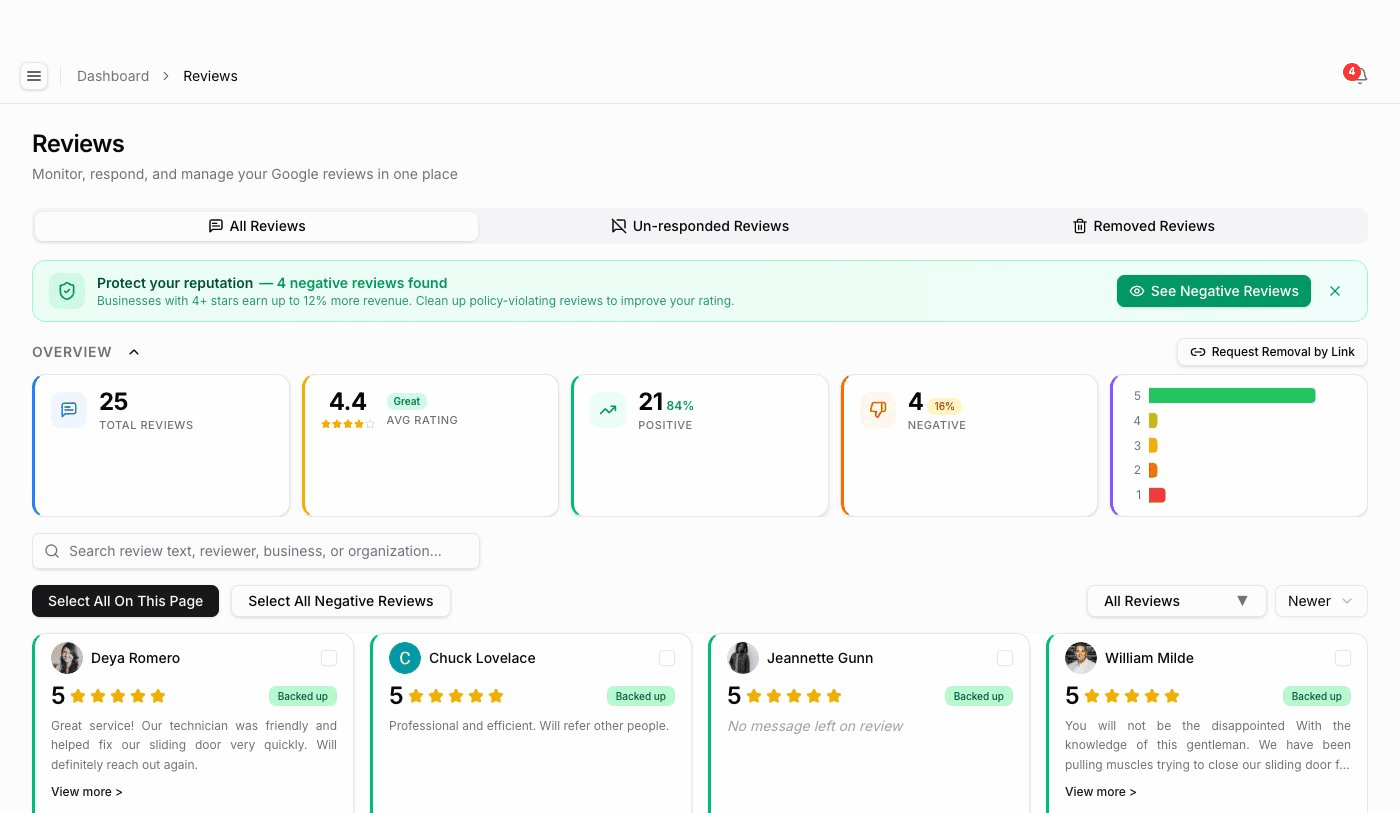
Every review lands in a single inbox with a scenario-aware draft already attached - owners edit one or two phrases, sign off, and post in seconds.
Three Principles Behind Every Reply
Never Argue Publicly
You will lose the argument with the reader, even if you win it with the reviewer. Future prospects scanning your reviews look for how the business handles conflict, not who was right. A defensive reply tells them “this business gets defensive.”
Move Resolution Offline Whenever Possible
Phone numbers and email addresses in replies do two things: they show you’re accessible, and they let the actual fix happen privately. Public back-and-forth threads almost always escalate.
Reply to Positives Too
Most owners reply only to negatives. The result: every reply on the listing is defensive. Replying to positives - even briefly - balances the tone of the listing and rewards the customers who took the time to leave one.
What to Automate, What to Keep Human

AI drafts the reply, the owner reads it, edits one or two phrases on their phone, signs with their name, hits send. The dashboard does the volume work; the human does the part customers actually feel.
The rule we apply with clients: AI drafts, owner edits, owner sends.
For volume, AI review response tools are essential - replying to 60+ reviews a month manually isn’t sustainable. But the final pass should always be the owner: changing one or two phrases, adding the technician’s name, signing with the owner’s first name. That’s the difference between a reply that reads human and one that reads robotic.
For SMBs ready to systematize this without losing the human signal, dedicated platforms matter. RenewLocal’s AI Review Responses feature gives owners scenario-aware draft generation that maps directly to the 12 templates above - owners review, edit, and approve in seconds. To see what the response cadence is actually worth on your numbers, run our review impact calculator - a half-star lift on a $1M business is typically $35K–$45K per year, and consistent owner responses are one of the four ranking signals that move it. For the broader reputation operating system around it, our review and reputation management service wraps the response engine with monitoring, dispute handling, and asking-cadence in one place. Treated as core infrastructure, reputation management for small business is the difference between a listing that reads like a brand and one that reads like a call center.
Ready to protect your Google Business Profile?
AI-powered review management and profile protection. Start your free 7-day trial.