Search “do google reviews help seo” and you’ll find the same lazy answer repeated across a hundred blog posts: yes, reviews are a ranking factor.
That’s true. It’s also useless. Reviews are a ranking factor in the same way that a steering wheel is a “vehicle component” — technically accurate, structurally meaningless. What an operator actually needs to know is which signals reviews feed, how much weight each signal carries, and what reviews won’t fix.
This guide breaks down what a decade of working on local search has taught us: the four ways Google reviews actually move rankings, the way AI engines now use them, and the three things reviews don’t do — so you can stop chasing the wrong outcomes.
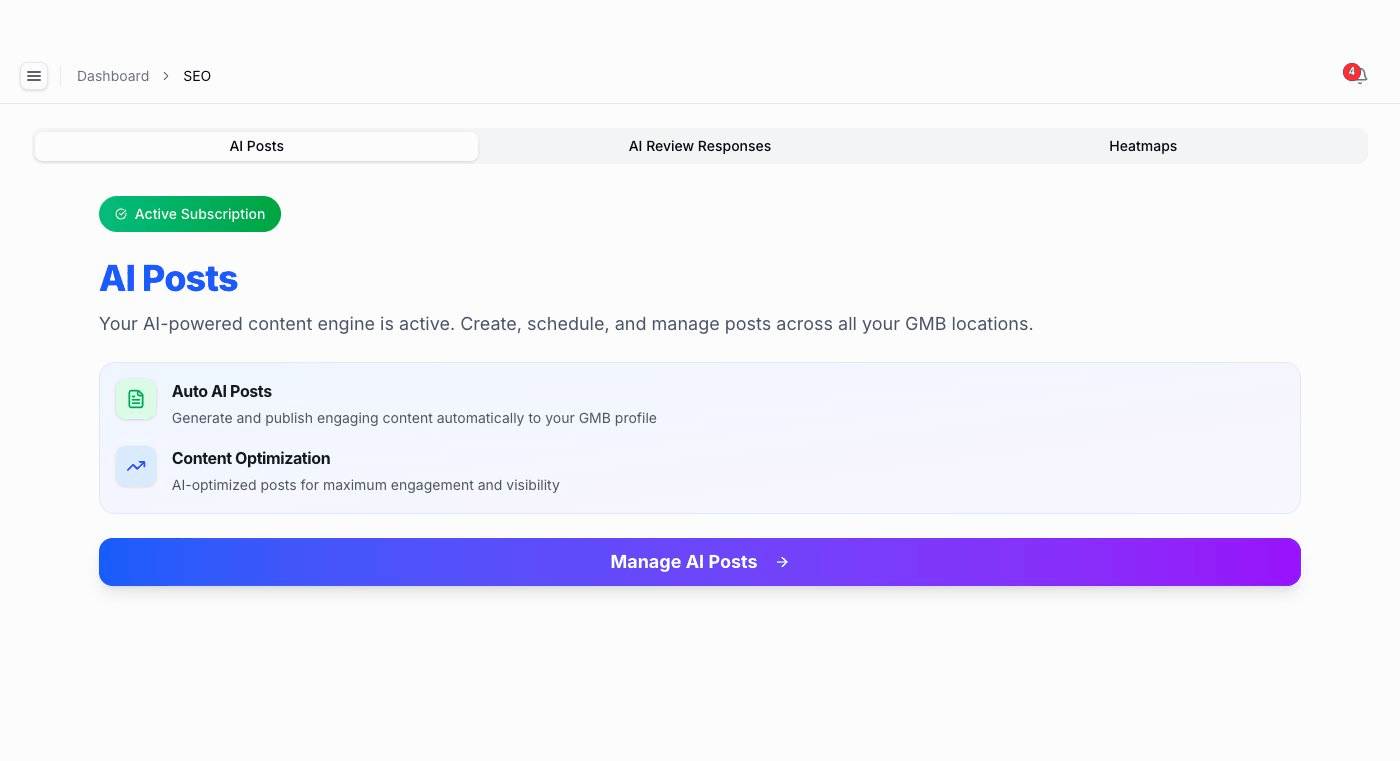
RenewLocal’s AI SEO dashboard surfaces the review-fed ranking signals — velocity, recency, and location-specific keyword inclusion — that drive movement in the local pack.
Reviews Don’t Help SEO. They Help Local SEO.
The first thing to clear up: when we say “reviews help SEO,” what we mean is reviews help local SEO — the local pack, the map results, and the area-targeted organic listings.
Google runs a separate ranking system for local search. The local pack algorithm uses three primary factors: relevance, distance, and prominence. Reviews feed several of those factors. They do almost nothing for organic rankings on non-local queries — searches without a place attached.
If you sell software globally, reviews on your Google Business Profile won’t help your SEO. If you fix garage doors in Tampa, reviews are one of the highest-leverage levers you have.
The rest of this guide assumes you’re a local business. For a broader take on what Business Profile signals are worth, we wrote a separate guide on Google Business Profile posts.
The Four Ranking Signals Google Reviews Actually Feed
1. Review Count, Velocity, and Recency
Google’s local algorithm cares less about your total review count and more about your review velocity — how many you’re getting per month — and recency — when the last one came in.
A business with 500 reviews and the last one from 14 months ago looks dead. A business with 50 reviews and one new review every two weeks looks active, busy, and trusted. The algorithm reads this as a signal that real customers are interacting with the business right now. Industry data from ReviewTrackers confirms that consumers actively discount reviews older than three months when judging a local business — and Google’s algorithm appears to weight them similarly.
This is why we tell clients in our audits that the review-collection cadence matters more than the catch-up sprint. Five reviews per month, every month, beats fifty reviews in one quarter and silence after.
2. Keyword Inclusion in Review Body Text
Google reads the words customers type into reviews. When a review says “the best emergency plumber in St. Petersburg, fixed our burst pipe in 30 minutes”, you’ve just gotten a free organic ranking signal for “emergency plumber St. Petersburg.”
You can’t pay for these keyword inclusions. You can prompt them — by asking customers to mention the specific service they used and the city when you ask for a review. Most owners ask for “a review” generically. The owners who ask “if you have a moment, could you mention the [service] and that we’re in [city] — it really helps” get reviews that map directly to commercial keywords.

Local operators with active review pipelines feed Google the velocity, recency, and on-the-ground language signals the local pack ranks on. The “active business” signal is one of the most under-managed inputs in local SEO.
3. Click-Through Rate from the SERP
Star ratings show up in Google’s local pack and in the rich results for your business name. They function as a CTR multiplier.
A business with 4.8 stars in the local pack gets clicked on more than a business with 3.6 stars in the same position. Higher CTR is a behavioral signal Google uses to validate that the listing matches user intent — and over time, that signal pushes the listing up in the rankings. BrightLocal’s 2024 Local Consumer Review Survey found that 87% of consumers read reviews before engaging with a local business, and only 3% would consider a business with a rating below 3 stars — meaning a poor star rating actively prevents clicks at the SERP layer.
This compounds: better stars → more clicks → higher rank → even more clicks. The flip side is also true. A low-star profile signals that users don’t find your listing useful, which buries you further over time.
4. NAP Confirmation Through Review Content
Reviews that mention your business name, address landmarks, or location (“right next to the Publix on Dale Mabry”) give Google a third-party confirmation that your NAP (Name, Address, Phone) data is accurate. NAP consistency is a foundational local ranking factor confirmed in Whitespark’s annual Local Search Ranking Factors study, and review content helps confirm it.
This one is invisible to most owners — there’s no dashboard showing “your reviews confirmed your address 14 times this month” — but it’s why locally specific reviews outperform generic five-star reviews on the same business profile.
How AI Engines (ChatGPT, Gemini, Google AI Overview) Use Reviews
The new wrinkle in 2026: AI search results now cite review profiles directly.
When a user asks ChatGPT “what’s the best HVAC company in Phoenix”, the AI doesn’t just rank URLs — it pulls in business profile data and the language customers used in reviews to summarize what’s most highly regarded. Your review body text is now training data for the answer engine that decides whether your business gets recommended.
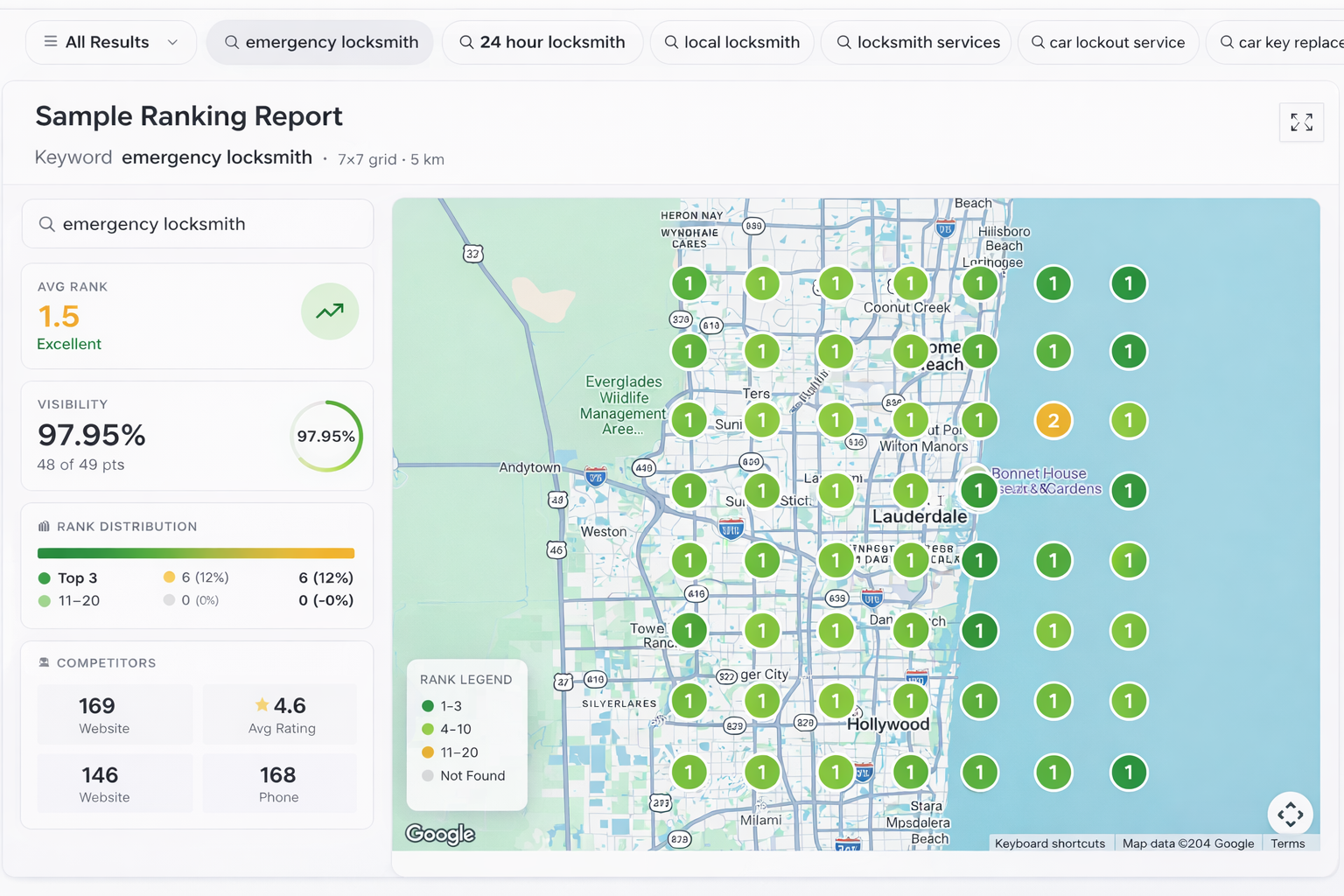
AI engines now read review language directly. RenewLocal’s ChatGPT visibility view surfaces which review phrases AI engines are pulling into their answers — the most under-priced ranking factor in 2026.
We unpacked this in why your Google reviews might be disappearing in 2026. The short version: AI engines reward businesses with consistent positive review language, recent activity, and topical specificity (reviews that describe the service in detail). Generic five-star reviews (“great service!”) are increasingly invisible to AI summarization. Detailed reviews that include the service category, neighborhood, and outcome are what get cited.
This is the most under-priced ranking factor in local search right now. Most operators haven’t connected reviews to AI visibility yet — which is exactly why our AI SEO platform tracks AI-citation activity alongside traditional ranking metrics in a single view.
Three Things Google Reviews Don’t Do
They Don’t Pass PageRank
Reviews are not backlinks. A glowing review with a link in it doesn’t pass authority to your homepage. If your goal is to rank a specific page on your website for a specific keyword, reviews aren’t the lever — content, backlinks, and on-page SEO are.
This is why the question “do google reviews help my website rank?” has a different answer than “do google reviews help my Google Business Profile rank?” The Business Profile, yes. The website itself, only indirectly through CTR and brand searches. If your website fundamentals need work, our SEO services handle the foundation that reviews are designed to amplify.
They Don’t Help Non-Local Rankings
If you’re a service business that operates in one metro area, reviews help you rank inside that metro. They do nothing for searches without a location attached. Someone searching “best garage door repair company” without specifying a city won’t see your Tampa reviews factored in unless their location signals tell Google they’re in Tampa.

Reviews compound a working site. They cannot rescue one with broken on-page SEO, missing service pages, or technical issues at the foundation. Audit the analytics first; the review work pays back faster on a structurally sound site.
They Don’t Fix Broken On-Page SEO
We’ve audited businesses with 4.9 stars and 200+ reviews that rank on page three for their primary keyword. The reason: their website is missing service pages, has no location-specific content, has slow load times, or is non-responsive on mobile. Reviews can’t outperform a fundamentally broken site. They can only amplify a site that’s already structured correctly.
If your on-page SEO is the problem, no amount of reviews will fix it. Fix the foundation first; then reviews compound.
What This Means for Your Review Strategy
Strip the takeaways down:
- Cadence over catch-up. Five reviews a month forever beats a one-time push. Use our review impact calculator to see how many you need each month to hit your target rating.
- Ask for specifics. A review that mentions the service and city is worth multiple generic five-stars.
- Reply to every review. Your responses also feed the algorithm and the AI summary engines.
- Reviews compound a working site, not a broken one. Audit your on-page SEO first.
- The AI-citation angle is the most under-priced factor. Optimize for it now.
This is the framework we apply when we run a reputation audit for a new client. The goal is never just “more reviews” — it’s the right kind of reviews, at the right cadence, in the right language, on a foundation that’s structurally ready to amplify them. If you want to see what this lift could be worth on your own numbers, our review impact calculator runs the math in 60 seconds.
Where We’ve Covered This Topic
We unpacked the broader reputation picture for SMBs in a recent feature for The Times Australia, where we walked through the quiet reputation risks growing operators underestimate, and the operational systems that actually close the gap. The review-and-SEO loop in this guide sits inside that bigger picture: reviews are the most measurable piece, but listing hygiene, AI-citation monitoring, and response cadence sit alongside them as core infrastructure. The full piece, and more SMB-operator coverage, lives across the Times Media network.
For SMBs ready to move from reactive to proactive on this, dedicated tooling matters. RenewLocal’s AI SEO platform and GBP management dashboard handle the consistent ask, the AI-citation monitoring, and the listing hygiene that compounds rankings over time. Treated as core infrastructure rather than a marketing afterthought, reputation management for small business becomes one of the highest-leverage operational systems an owner can put in place. Review management for local businesses — like RenewLocal — is what closes the gap between knowing these signals and acting on them.
Ready to protect your Google Business Profile?
AI-powered review management and profile protection. Start your free 7-day trial.